
__________Layered Curriculum®. . . because every child deserves a special education™_
 |
|
 _
_ 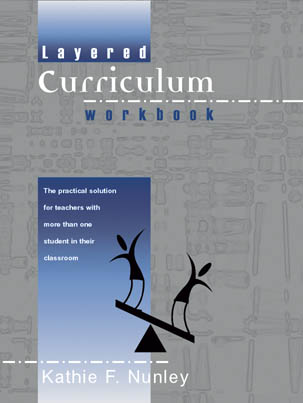
Layered
Curriculum TEXT & WORKBOOK
Set
for only
$43.95
(free shipping in
US)
Tweet
This is your Brain on Drugs
© Dr Kathie NunleyThe rumor among adolescents is that some drugs are safe. This is particularly the perception for one of the most popular teen drugs known as Ecstasy. Ecstasy as well cocaine, alcohol,crack and even marijuana can do serious lifelong damage to the brain and subsequently to one's quality of life.
The lifelong factor results from the brain's amazing ability to overcompensate and repair itself. The brain seeks "sameness", a condition known as homeostasis. When things are in balance,
the status quo is met, and the brain repair system appears content. But when things get out of balance, the repair department comes to life and reacts quickly.Drugs work in the brain by mimicking natural chemicals, called neurotransmitters. By imitating these chemicals the drugs can override the system and keep pleasure centers and other regions active much longer than normal. But the brain will eventually try to correct this error. Some brains respond to the imbalance quicker than others.
The first line of defense in the brain's repair department is to reduce the amount of chemical that the brain produces on it's own. That reduction leads to the drug user's perception of tolerance. Since the brain has compensated for the increase of artificial chemical by reducing production of natural chemical the drug effect is reduced and the user has to increase the amount used.
The second line of defense is for the brain to reduce receptor sites, or locations on nerve cells that chemicals can attach to. If the chemicals can't attach, they can't work. Sometimes this
removal can be permanent.Now come the "lifelong damage" scenario. Once natural chemical production is reduced and receptor sites are removed, the user has little hope for speedy or even successful withdrawal.
The drug user who wants to quit the drug use is left with a brain that no longer works correctly. There is no restore program currently available that will set the brain back to its original condition of chemical levels and receptor sites. The user has to just wait it out and hope the brain will heal itself.Sometimes it does. Sometimes, it doesn't.
About the Author:
Dr Kathie Nunley is an educational psychologist, researcher and author of several books on parenting and teaching, including A Student's Brain (Brains.org) and the best selling, "Differentiating the High School Classroom" (Corwin Press). She is the developer of the Layered Curriculum® method of instruction and has worked with parents and educators around the world to better structure schools to make brain-friendly environments. In addition, her work has been used by the Boeing Corporation, Family Circle Magazine, the Washington Post, and ABC television.
Email her: Kathie (at) brains.orgCopyright © 1998 - current year by Kathie F. Nunley.
All Rights Reserved.
Layered
Curriculum is a registered trademark developed by
Dr. Kathie F. Nunley.