
__________Layered Curriculum®. . . because every child deserves a special education™_
 |
|
 _
_ 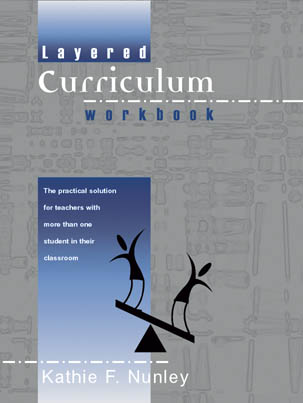
Layered
Curriculum TEXT & WORKBOOK
Set
for only
$43.95
(free shipping in
US)
Tweet
The Caffeine Craze of Youth
© Dr Kathie NunleyMany of us wake up in the morning with only one thought on our mind....coffee!
No ones questions the little perk that morning coffee provides. In fact, research supports many positives for caffeine use, including an improvement in long-term memory and faster learning.(1).
But the research uses moderate amounts of caffeine and it doesn't take into consideration the problems young nervous systems encounter with chronic caffeine use. Caffeine mimics a neural chemical which our body produces naturally. Continuous use of caffeine will cause the body's own system to quit making the neural chemical - after all, why bother producing it in the body, when you are providing it artificially.
This addiction to caffeine is now becoming more than just an adult problem. We see it moving into younger and younger populations via soft drink consumption which has increased dramatically in the last decade and a half. The use of caffeine in youth causes a greater concern as the developing nervous system needs to learn how to produce and balance its own natural neural chemicals. Providing them artificially during this time causes confusion.
How much caffeine are American(2) children getting? Here's a brief comparison:(3)
One cup of coffee has 135 mgs. of caffeine.
One can of Mountain Dew - 56 mgs.
One cup of tea - 50 mgs.
One can of Diet Coke - 47 mgs.
One can of Sunkist Orange - 42 mgs.
One can of Dr. Pepper - 42 mgs.
One can of Pepsi - 38 mgs.
One can of Coke - 35 mgs.Other than beverages:
One Excedrin pain reliever tablet - 65 mgs.
One cup Ben & Jerry's coffee yogurt - 85 mgs.
One Hershey Bar - 10 mgs.*
*I'm asked frequently about the caffeine in chocolate. As you can see a child would have to consume 14 chocolate bars to get the caffeine amount in a cup of coffee. I think a child eating 14 chocolate bars has a bigger problem than caffeine consumption.
Much of the increase we see in childhood consumption of caffeine must be blamed on the availability of the products in our schools. At some point during the last 10 years many of our public schools began to actually depend upon soft drink sales as a major source of funding.
To the concerns of caffeine use on the developing nervous system, we can now add the National Institute of Health's statement blaming America's obesity on increased soft drink consumption and the new research now linking the high phosphorus content of soft drinks with robbing our bones of calcium - of particular concern to young females.
Who is protecting our children? We are the nation's educators. If we don't take a stand, who will?
(1) Hameleers, P.(2000). Human Psychopharmacology Clinical &
Experimental, Vol 15(8) 573-581.(2) The USA is one of a handful of countries in the world that allows
soft drink manufacturers to add caffeine to soft drinks.(3) Center for Science in the Public Interest.
About the Author:
Dr Kathie Nunley is an educational psychologist, researcher and author of several books on parenting and teaching, including A Student's Brain (Brains.org) and the best selling, "Differentiating the High School Classroom" (Corwin Press). She is the developer of the Layered Curriculum® method of instruction and has worked with parents and educators around the world to better structure schools to make brain-friendly environments. In addition, her work has been used by the Boeing Corporation, Family Circle Magazine, the Washington Post, and ABC television.
Email her: Kathie (at) brains.orgCopyright © 1998 - current year by Kathie F. Nunley.
All Rights Reserved.
Layered
Curriculum is a registered trademark developed by
Dr. Kathie F. Nunley.